Parkinson's disease (PD, also known as idiopathic or primary parkinsonism, hypokinetic rigid syndrome (HRS), or paralysis agitans) is a degenerative disorder of the central nervous system mainly affecting the motor system.
The motor symptoms of Parkinson's disease result from the death of dopamine-generating cells in the substantia nigra, a region of the midbrain.
The cause of this cell death is poorly understood. Early in the course of the disease, the most obvious symptoms are movement-related; these include shaking, rigidity, slowness of movement and difficulty with walking and gait. Later, thinking and behavioral problems may arise, with dementia commonly occurring in the advanced stages of the disease, whereas depression is the most common psychiatric symptom. Other symptoms include sensory, sleep and emotional problems. Parkinson's disease is more common in older people, with most cases occurring after the age of 50; when it is seen in young adults, it is called young onset PD (YOPD).
The main motor symptoms are collectively called parkinsonism, or a "parkinsonian syndrome". The disease can be either primary or secondary. Primary Parkinson's disease is referred to as idiopathic (having no known cause), although some atypical cases have a genetic origin, while secondary parkinsonism is due to known causes like toxins. Many risks and protective factors have been investigated: the clearest evidence is for an increased risk of PD in people exposed to certain pesticides and a reduced risk intobacco smokers. The pathology of the disease is characterized by the accumulation of a protein into Lewy bodies in neurons, and from insufficient formation and activity of dopamine in certain parts of the midbrain. Where the Lewy bodies are located is often related to the expression and degree of the symptoms of an individual. Diagnosis of typical cases is mainly based on symptoms, with tests such as neuroimaging being used for confirmation.
Treatments are effective at improving the early motor symptoms of the disease. This is typically with the medications L-DOPA anddopamine agonists. As the disease progresses and dopaminergic neurons continue to be lost, these drugs eventually become ineffective at treating the symptoms and at the same time produce a complication marked by involuntary writhing movements. Diet and some forms of rehabilitation have shown some effectiveness at improving symptoms. Surgery and deep brain stimulationhave been used to reduce motor symptoms as a last resort in severe cases where drugs are ineffective. Research directions include investigations into new animal models of the disease and of the potential usefulness of gene therapy, stem cell transplants andneuroprotective agents. Medications to treat non-movement-related symptoms of PD, such as sleep disturbances and emotional problems, also exist.
In 2013 PD resulted in 103,000 deaths up from 44,000 deaths in 1990.disease is named after the English doctor James Parkinson, who published the first detailed description in An Essay on the Shaking Palsy in 1817.[2 Several major organizations promote research and improvement of quality of life of those with the disease and their families. Public awareness campaigns include Parkinson's disease day (on the birthday of James Parkinson, 11 April) and the use of a red tulip as the symbol of the disease. People with parkinsonism who have increased the public's awareness of the condition include actor Michael J. Fox, Olympic cyclist Davis Phinney, and professional boxer Muhammad Ali. Parkinson's not only affects humans, but other primates as well, which have often been used in researching the disease and testing approaches to its treatment.class="reference" id="cite_ref-4" style="line-height: 1; unicode-bidi: -webkit-isolate; font-size: 11.1999998092651px;">[45
Classification
The term parkinsonism is used for a motor syndrome whose main symptoms are tremor at rest, stiffness, slowing of movement and postural instability. Parkinsonian syndromes can be divided into four subtypes according to their origin:- primary or idiopathic
- secondary or acquired
- hereditary parkinsonism, and
- Parkinson plus syndromes or multiple system degeneration.6
Parkinson's disease is the most common form of parkinsonism and is usually defined as "primary" parkinsonism, meaning parkinsonism with no external identifiable cause.class="reference" id="cite_ref-Jankovic_book-Epidemiology_8-0" style="line-height: 1; unicode-bidi: -webkit-isolate; font-size: 11.1999998092651px;">[8In recent years several genes that are directly related to some cases of Parkinson's disease have been discovered. As much as this conflicts with the definition of Parkinson's disease as an idiopathic illness, genetic parkinsonism disorders with a similar clinical course to PD are generally included under the Parkinson's disease label. The terms "familial Parkinson's disease" and "sporadic Parkinson's disease" can be used to differentiate genetic from truly idiopathic forms of the disease.Usually classified as a movement disorder, PD also gives rise to several non-motor types of symptoms such as sensory deficits,[10 cognitive difficulties or sleep problems.Parkinson plus diseases are primary parkinsonisms which present additional features.include multiple system atrophy, progressive supranuclear palsy, corticobasal degeneration and dementia with Lewy bodies.[7In terms of pathophysiology, PD is considered a synucleiopathy due to an abnormal accumulation of alpha-synuclein protein in the brain in the form of Lewy bodies, as opposed to other diseases such as Alzheimer's disease where the brain accumulates tau protein in the form of neurofibrillary tangles.[12 Nevertheless, there is clinical and pathological overlap between tauopathies and synucleinopathies. The most typical symptom of Alzheimer's disease, dementia, occurs in advanced stages of PD, while it is common to find neurofibrillary tangles in brains affected by PD.Dementia with Lewy bodies (DLB) is another synucleinopathy that has similarities with PD, and especially with the subset of PD cases with dementia. However, the relationship between PD and DLB is complex and still has to be clarified.[13 They may represent parts of a continuum or they may be separate diseases.13
Parkinson's Disease Signs and symptoms


Causes
Parkinson's disease in most people is idiopathic (having no specific known cause). However, a small proportion of cases can be attributed to known genetic factors. Other factors have been associated with the risk of developing PD, but no causal relationships have been proven.
Environmental factors

Implicated agents include insecticides, primarily chlorpyrifos and organochlorinesstyle="text-decoration-style: initial; text-decoration-color: initial; background-image: none; background-position: initial; background-size: initial; background-repeat: initial; background-attachment: initial; background-origin: initial; background-clip: initial;">pesticides, such as rotenone or paraquat, andherbicides, such as Agent Orange and ziram.[36class="reference" id="cite_ref-Veterans_34-1" style="line-height: 1; unicode-bidi: -webkit-isolate; font-size: 11.1999998092651px;">[34style="text-decoration-style: initial; text-decoration-color: initial; background-image: none; background-position: initial; background-size: initial; background-repeat: initial; background-attachment: initial; background-origin: initial; background-clip: initial;">Heavy metals exposure has been proposed to be a risk factor, through possible accumulation in the substantia nigra; however, studies on the issue have been inconclusive.[33
Genetics
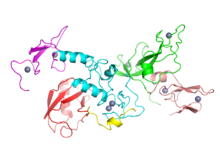
Mutations in specific genes have been conclusively shown to cause PD. These genes code for alpha-synuclein (SNCA), parkin (PRKN), leucine-rich repeat kinase 2 (LRRK2 or dardarin), PTEN-induced putative kinase 1 (PINK1), DJ-1 and ATP13A2.class="reference" id="cite_ref-lesage_38-1" style="line-height: 1; unicode-bidi: -webkit-isolate; font-size: 11.1999998092651px;">[38 In most cases, people with these mutations will develop PD. With the exception of LRRK2, however, they account for only a small minority of cases of PD.most extensively studied PD-related genes are SNCA and LRRK2. Mutations in genes including SNCA, LRRK2 andglucocerebrosidase (GBA) have been found to be risk factors for sporadic PD. Mutations in GBA are known to cause Gaucher's disease.[38 Genome-wide association studies, which search for mutated alleles with low penetrance in sporadic cases, have now yielded many positive results.The role of the SNCA gene is important in PD because the alpha-synuclein protein is the main component of Lewy bodies.[38 Missense mutations of the gene (in which a single nucleotide is changed), and duplications and triplications of the locus containing it have been found in different groups with familial PD.mutations are rare.[38 On the other hand, multiplications of the SNCA locus account for around 2% of familial cases.have been found in asymptomatic carriers, which indicate that penetrance is incomplete or age-dependent.[38
The LRRK2 gene (PARK8) encodes for a protein called dardarin. The name dardarin was taken from a Basque word for tremor, because this gene was first identified in families from England and the north of Spain.in LRRK2 are the most common known cause of familial and sporadic PD, accounting for approximately 5% of individuals with a family history of the disease and 3% of sporadic cases.[9are many mutations described in LRRK2, however unequivocal proof of causation only exists for a small number.[38
Pathology
Anatomical
The basal ganglia, a group of "brain structures" innervated by the dopaminergic system, are the most seriously affected brain areas in PD.main pathological characteristic of PD is cell death in the substantia nigra and, more specifically, the ventral (front) part of the pars compacta, affecting up to 70% of the cells by the time death occurs.[9
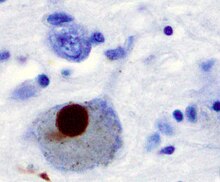
Macroscopic alterations can be noticed on cut surfaces of the brainstem, where neuronal loss can be inferred from a reduction ofneuromelanin pigmentation in the substantia nigra and locus coeruleus.style="text-decoration-style: initial; text-decoration-color: initial; background-image: none; background-position: initial; background-size: initial; background-repeat: initial; background-attachment: initial; background-origin: initial; background-clip: initial;">histopathology (microscopic anatomy) of the substantia nigra and several other brain regions shows neuronal loss and Lewy bodies in many of the remaining nerve cells. Neuronal loss is accompanied by death of astrocytes (star-shaped glial cells) and activation of the microglia (another type of glial cell). Lewy bodies are a key pathological feature of PD.[41
Pathophysiology
A particular conceptual model of the motor circuit and its alteration with PD has been of great influence since 1980, although some limitations have been pointed out which have led to modifications.this model, the basal ganglia normally exert a constant inhibitory influence on a wide range of motor systems, preventing them from becoming active at inappropriate times. When a decision is made to perform a particular action, inhibition is reduced for the required motor system, thereby releasing it for activation. Dopamine acts to facilitate this release of inhibition, so high levels of dopamine function tend to promote motor activity, while low levels of dopamine function, such as occur in PD, demand greater exertions of effort for any given movement. Thus, the net effect of dopamine depletion is to produce hypokinesia, an overall reduction in motor output.[40 Drugs that are used to treat PD, conversely, may produce excessive dopamine activity, allowing motor systems to be activated at inappropriate times and thereby producing dyskinesias.40
Brain cell death
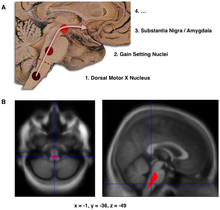
There is speculation of several mechanisms by which the brain cells could be lost.mechanism consists of an abnormal accumulation of the protein alpha-synuclein bound to ubiquitin in the damaged cells. This insoluble protein accumulates inside neurones forming inclusions called Lewy bodies.[9to the Braak staging, a classification of the disease based on pathological findings, Lewy bodies first appear in the olfactory bulb, medulla oblongata and pontine tegmentum, with individuals at this stage being asymptomatic. As the disease progresses, Lewy bodies later develop in the substantia nigra, areas of the midbrain and basal forebrain, and in a last step the neocortex.[9 These brain sites are the main places of neuronal degeneration in PD; however, Lewy bodies may not cause cell death and they may be protective.class="reference" id="cite_ref-pmid20563819_44-1" style="line-height: 1; unicode-bidi: -webkit-isolate; font-size: 11.1999998092651px;">[44 In people with dementia, a generalized presence of Lewy bodies is common in cortical areas.Neurofibrillary tangles and senile plaques, characteristic of Alzheimer's disease, are not common unless the person is demented.Other cell-death mechanisms include proteosomal and lysosomal system dysfunction and reduced mitochondrial activity.[43 Iron accumulation in the substantia nigra is typically observed in conjunction with the protein inclusions. It may be related to oxidative stress, protein aggregation and neuronal death, but the mechanisms are not fully understood.45
Diagnosis
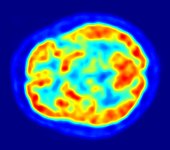
Medical organizations have created diagnostic criteria to ease and standardize the diagnostic process, especially in the early stages of the disease. The most widely known criteria come from the UK Parkinson's Disease Society Brain Bank and the U.S. National Institute of Neurological Disorders and Stroke.PD Society Brain Bank criteria require slowness of movement (bradykinesia) plus either rigidity, resting tremor, or postural instability. Other possible causes for these symptoms need to be ruled out. Finally, three or more of the following features are required during onset or evolution: unilateral onset, tremor at rest, progression in time, asymmetry of motor symptoms, response to levodopa for at least five years, clinical course of at least ten years and appearance of dyskinesias induced by the intake of excessive levodopa.[6 Accuracy of diagnostic criteria evaluated at autopsy is 75–90%, with specialists such as neurologists having the highest rates.Computed tomography (CT) and magnetic resonance imaging (MRI) brain scans of people with PD usually appear normal.[48 These techniques are nevertheless useful to rule out other diseases that can be secondary causes of parkinsonism, such as basal ganglia tumors, vascular pathology and hydrocephalus.specific technique of MRI,diffusion MRI, has been reported to be useful at discriminating between typical and atypical parkinsonism, although its exact diagnostic value is still under investigation.[48Dopaminergic function in the basal ganglia can be measured with different PET and SPECT radiotracers. Examples are ioflupane (123I) (trade name DaTSCAN) and iometopane(Dopascan) for SPECT or fluorodeoxyglucose (18F) for PET.pattern of reduced dopaminergic activity in the basal ganglia can aid in diagnosing PD.[48
Prevention
Caffeine consumption appears protective against Parkinson's disease with a greater decrease in risk occurring with a larger intake of caffeinated beverages such as coffee.tobacco smoke causes adverse health effects, decreases life expectancy and quality of life, it may reduce the risk of PD by a third when compared to non-smokers.[33 The basis for this effect is not known, but possibilities include an effect of nicotine as a dopamine stimulant.class="reference" id="cite_ref-50" style="line-height: 1; unicode-bidi: -webkit-isolate; font-size: 11.1999998092651px;">[50 Tobacco smoke contains compounds that act as MAO inhibitors that also might contribute to this effect.Antioxidants, such as vitamins C and D, have been proposed to protect against the disease but results of studies have been contradictory and no positive effect has been proven.[33 The results regarding fat and fatty acids have been contradictory, with various studies reporting protective effects, risk-increasing effects or no effects.there have been preliminary indications of a possible protective role of estrogens and anti-inflammatory drugs.[33
Management
Levodopa
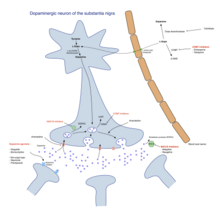
Levodopa has been the most widely used treatment for over 30 years.is converted into dopamine in the dopaminergic neurons by dopa decarboxylase.[52 Since motor symptoms are produced by a lack of dopamine in the substantia nigra, the administration of L-DOPA temporarily diminishes the motor symptoms.Only 5–10% of L-DOPA crosses the blood–brain barrier. The remainder is often metabolized to dopamine elsewhere, causing a variety of side effects including nausea,dyskinesias and joint stiffness.[52 Carbidopa and benserazide are peripheral dopa decarboxylase inhibitors,help to prevent the metabolism of L-DOPA before it reaches the dopaminergic neurons, therefore reducing side effects and increasing bioavailability. They are generally given as combination preparations with levodopa.[52Existing preparations are carbidopa/levodopa (co-careldopa) and benserazide/levodopa (co-beneldopa). Levodopa has been related to dopamine dysregulation syndrome, which is a compulsive overuse of the medication, and punding.are controlled release versions of levodopa in the form intravenous and intestinal infusions that spread out the effect of the medication. These slow-release levodopa preparations have not shown an increased control of motor symptoms or motor complications when compared to immediate release preparations.[52Tolcapone inhibits the COMT enzyme, which degrades dopamine, thereby prolonging the effects of levodopa.[52 It has been used to complement levodopa; however, its usefulness is limited by possible side effects such as liver damage.similarly effective drug, entacapone, has not been shown to cause significant alterations of liver function.[52 Licensed preparations of entacapone contain entacapone alone or in combination with carbidopa and levodopa.Levodopa preparations lead in the long term to the development of motor complications characterized by involuntary movements called dyskinesias and fluctuations in the response to medication.[52 When this occurs a person with PD can change from phases with good response to medication and few symptoms ("on" state), to phases with no response to medication and significant motor symptoms ("off" state).this reason, levodopa doses are kept as low as possible while maintaining functionality.[52Delaying the initiation of therapy with levodopa by using alternatives (dopamine agonists and MAO-B inhibitors) is common practice.former strategy to reduce motor complications was to withdraw L-DOPA medication for some time. This is discouraged now, since it can bring dangerous side effects such as neuroleptic malignant syndrome.[52 Most people with PD will eventually need levodopa and later develop motor side effects.52
Dopamine agonists
Several dopamine agonists that bind to dopaminergic post-synaptic receptors in the brain have similar effects to levodopa.were initially used for individuals experiencing on-off fluctuations and dyskinesias as a complementary therapy to levodopa; they are now mainly used on their own as an initial therapy for motor symptoms with the aim of delaying motor complications.[52used in late PD they are useful at reducing the off periods.[52 Dopamine agonists include bromocriptine, pergolide,pramipexole, ropinirole, piribedil, cabergoline, apomorphine and lisuride.
Dopamine agonists produce significant, although usually mild, side effects including drowsiness, hallucinations, insomnia, nausea and constipation.side effects appear even at a minimal clinically effective dose, leading the physician to search for a different drug.[52 Compared with levodopa, dopamine agonists may delay motor complications of medication use but are less effective at controlling symptoms.they are usually effective enough to manage symptoms in the initial years.[7They tend to be more expensive than levodopa.due to dopamine agonists are rare in younger people who have PD, but along with other side effects, become more common with age at onset.[7 Thus dopamine agonists are the preferred initial treatment for earlier onset, as opposed to levodopa in later onset.have been related to impulse control disorders (such as compulsive sexual activity and eating, and pathological gambling and shopping) even more strongly than levodopa.[26
Apomorphine, a non-orally administered dopamine agonist, may be used to reduce off periods and dyskinesia in late PD.is administered by intermittent injections or continuous subcutaneous infusions.[52 Since secondary effects such as confusion and hallucinations are common, individuals receiving apomorphine treatment should be closely monitored.dopamine agonists that are administered through skin patches (lisuride and rotigotine) and are useful for people in the initial stages and possibly to control off states in those in the advanced state.[55
MAO-B inhibitors
MAO-B inhibitors (selegiline and rasagiline) increase the level of dopamine in the basal ganglia by blocking its metabolism. They inhibit monoamine oxidase B (MAO-B) which breaks down dopamine secreted by the dopaminergic neurons. The reduction in MAO-B activity results in increased L-DOPA in the striatum.dopamine agonists, MAO-B inhibitors used as monotherapy improve motor symptoms and delay the need for levodopa in early disease, but produce more adverse effects and are less effective than levodopa. There are few studies of their effectiveness in the advanced stage, although results suggest that they are useful to reduce fluctuations between on and off periods.[52 An initial study indicated that selegiline in combination with levodopa increased the risk of death, but this was later disproven.52
Other drugs
Other drugs such as amantadine and anticholinergics may be useful as treatment of motor symptoms. However, the evidence supporting them lacks quality, so they are not first choice treatments.addition to motor symptoms, PD is accompanied by a diverse range of symptoms. A number of drugs have been used to treat some of these problems.[57 Examples are the use of quetiapine for psychosis, cholinesterase inhibitors for dementia, and modafinil for daytime sleepiness.class="reference" id="cite_ref-pmid19559160_58-0" style="line-height: 1; unicode-bidi: -webkit-isolate; font-size: 11.1999998092651px;">[58 A 2010 meta-analysis found that non-steroidal anti-inflammatory drugs (apart from aspirin), have been associated with at least a 15 percent (higher in long-term and regular users) reduction of incidence of the development of Parkinson's disease.59
Surgery

Rehabilitation
There is some evidence that speech or mobility problems can improve with rehabilitation, although studies are scarce and of low quality.class="reference" id="cite_ref-pmid18181210_62-0" style="line-height: 1; unicode-bidi: -webkit-isolate; font-size: 11.1999998092651px;">[62Regular physical exercise with or without physiotherapy can be beneficial to maintain and improve mobility, flexibility, strength, gait speed, and quality of life.when an exercise program is performed under the supervision of a physiotherapist, there are more improvements in motor symptoms, mental and emotional functions, daily living activities, and quality of life compared to a self-supervised exercise program at home.[63 In terms of improving flexibility and range of motion for people experiencing rigidity, generalized relaxation techniques such as gentle rocking have been found to decrease excessive muscle tension. Other effective techniques to promote relaxation include slow rotational movements of the extremities and trunk, rhythmic initiation, diaphragmatic breathing, andmeditation techniques.for gait and addressing the challenges associated with the disease such as hypokinesia (slowness of movement), shuffling and decreased arm swing; physiotherapists have a variety of strategies to improve functional mobility and safety. Areas of interest with respect to gait during rehabilitation programs focus on but are not limited to improving gait speed, base of support, stride length, trunk and arm swing movement. Strategies include utilizing assistive equipment (pole walking and treadmill walking), verbal cueing (manual, visual and auditory), exercises (marching and PNF patterns) and altering environments (surfaces, inputs, open vs. closed).[65Strengthening exercises have shown improvements in strength and motor function for people with primary muscular weakness and weakness related to inactivity with mild to moderate Parkinson’s disease. However, reports show a significant interaction between strength and the time the medications was taken. Therefore, it is recommended that people with PD should perform exercises 45 minutes to one hour after medications, when they are at their best.due to the forward flexed posture, and respiratory dysfunctions in advanced Parkinson’s disease, deep diaphragmatic breathing exercises are beneficial in improving chest wall mobility and vital capacity.[67 Exercise may improve constipation.One of the most widely practiced treatments for speech disorders associated with Parkinson's disease is the Lee Silverman voice treatment (LSVT).[61therapy and specifically LSVT may improve speech.[61 Occupational therapy (OT) aims to promote health and quality of life by helping people with the disease to participate in as many of their daily living activities as possible.have been few studies on the effectiveness of OT and their quality is poor, although there is some indication that it may improve motor skills and quality of life for the duration of the therapy.[6169
Palliative care
Palliative care is specialized medical care for people with serious illnesses, including Parkinson’s. The goal of this speciality is to improve quality of life for both the person suffering from Parkinson’s and the family by providing relief from the symptoms, pain, and stress of illnesses.Parkinson’s is not a curable disease, all treatments are focused on slowing decline and improving quality of life, and are therefore palliative in nature.[71
Palliative care should be involved earlier, rather than later in the disease course.class="reference" id="cite_ref-pmid20081638_73-0" style="line-height: 1; unicode-bidi: -webkit-isolate; font-size: 11.1999998092651px;">[73 Palliative care specialists can help with physical symptoms, emotional factors such as loss of function and jobs, depression, fear, and existential concerns.class="reference" id="cite_ref-pmid22771241_72-1" style="line-height: 1; unicode-bidi: -webkit-isolate; font-size: 11.1999998092651px;">[72Along with offering emotional support to both the patient and family, palliative care serves an important role in addressing goals of care. People with Parkinson’s may have many difficult decisions to make as the disease progresses such as wishes for feeding tube, non-invasive ventilator, and tracheostomy; wishes for or against cardiopulmonary resuscitation; and when to use hospice care.[71 Palliative care team members can help answer questions and guide people with Parkinson’s on these complex and emotional topics to help them make the best decision based on their own values.class="reference" id="cite_ref-pmid20081638_73-2" style="line-height: 1; unicode-bidi: -webkit-isolate; font-size: 11.1999998092651px;">[73
Other treatments
Muscles and nerves that control the digestive process may be affected by PD, resulting in constipation and gastroparesis (food remaining in the stomach for a longer period than normal).balanced diet, based on periodical nutritional assessments, is recommended and should be designed to avoid weight loss or gain and minimize consequences of gastrointestinal dysfunction.[29 As the disease advances, swallowing difficulties (dysphagia) may appear. In such cases it may be helpful to use thickening agents for liquid intake and an upright posture when eating, both measures reducing the risk of choking. Gastrostomy to deliver food directly into the stomach is possible in severe cases.Levodopa and proteins use the same transportation system in the intestine and the blood–brain barrier, thereby competing for access.[29 When they are taken together, this results in a reduced effectiveness of the drug.when levodopa is introduced, excessive protein consumption is discouraged and well balanced Mediterranean dietis recommended. In advanced stages, additional intake of low-protein products such as bread or pasta is recommended for similar reasons.[29 To minimize interaction with proteins, levodopa should be taken 30 minutes before meals.the same time, regimens for PD restrict proteins during breakfast and lunch, allowing protein intake in the evening.[29
Repetitive transcranial magnetic stimulation temporarily improves levodopa-induced dyskinesias.usefulness in PD is an open research topic,[77 although recent studies have shown no effect by rTMS.style="text-decoration-style: initial; text-decoration-color: initial; background-image: none; background-position: initial; background-size: initial; background-repeat: initial; background-attachment: initial; background-origin: initial; background-clip: initial;">nutrients have been proposed as possible treatments; however there is no evidence that vitamins or food additives improve symptoms.[79 There is no evidence to substantiate that acupuncture and practice of Qigong, or T'ai chi, have any effect on the course of the disease or symptoms. Further research on the viability of Tai chi for balance or motor skills are necessary.class="reference" id="cite_ref-pmid18973253_81-0" style="line-height: 1; unicode-bidi: -webkit-isolate; font-size: 11.1999998092651px;">[81style="text-decoration-style: initial; text-decoration-color: initial; background-image: none; background-position: initial; background-size: initial; background-repeat: initial; background-attachment: initial; background-origin: initial; background-clip: initial;">Fava beans and velvet beans are natural sources of levodopa and are eaten by many people with PD. While they have shown some effectiveness in clinical trials,[83 their intake is not free of risks. Life-threatening adverse reactions have been described, such as the neuroleptic malignant syndrome.class="reference" id="cite_ref-pmid19678834_85-0" style="line-height: 1; unicode-bidi: -webkit-isolate; font-size: 11.1999998092651px;">[85
Prognosis

Motor symptoms, if not treated, advance aggressively in the early stages of the disease and more slowly later. Untreated, individuals are expected to lose independent ambulation after an average of eight years and be bedridden after ten years.it is uncommon to find untreated people nowadays. Medication has improved the prognosis of motor symptoms, while at the same time it is a new source of disability because of the undesired effects of levodopa after years of use.[86 In people taking levodopa, the progression time of symptoms to a stage of high dependency from caregivers may be over 15 years.it is hard to predict what course the disease will take for a given individual.[86 Age is the best predictor of disease progression.rate of motor decline is greater in those with less impairment at the time of diagnosis, while cognitive impairment is more frequent in those who are over 70 years of age at symptom onset.[43
Since current therapies improve motor symptoms, disability at present is mainly related to non-motor features of the disease.the relationship between disease progression and disability is not linear. Disability is initially related to motor symptoms.[86 As the disease advances, disability is more related to motor symptoms that do not respond adequately to medication, such as swallowing/speech difficulties, and gait/balance problems; and also to motor complications, which appear in up to 50% of individuals after 5 years of levodopa usage.after ten years most people with the disease have autonomic disturbances, sleep problems, mood alterations and cognitive decline.[86 All of these symptoms, especially cognitive decline, greatly increase disability.class="reference" id="cite_ref-pmid17131223_86-7" style="line-height: 1; unicode-bidi: -webkit-isolate; font-size: 11.1999998092651px;">[86
The life expectancy of people with PD is reduced.style="text-decoration-style: initial; text-decoration-color: initial; background-image: none; background-position: initial; background-size: initial; background-repeat: initial; background-attachment: initial; background-origin: initial; background-clip: initial;">Mortality ratios are around twice those of unaffected people.[86 Cognitive decline and dementia, old age at onset, a more advanced disease state and presence of swallowing problems are all mortality risk factors. On the other hand a disease pattern mainly characterized by tremor as opposed to rigidity predicts an improved survival.from aspiration pneumonia is twice as common in individuals with PD as in the healthy population.[86
Epidemiology
PD is the second most common neurodegenerative disorder after Alzheimer's disease and affects approximately seven million people globally and one million people in the United States.class="reference" id="cite_ref-pmid16713924_33-8" style="line-height: 1; unicode-bidi: -webkit-isolate; font-size: 11.1999998092651px;">[33 The prevalence (proportion in a population at a given time) of PD is about 0.3% of the whole population in industrialized countries. PD is more common in the elderly and prevalence rises from 1% in those over 60 years of age to 4% of the population over 80.mean age of onset is around 60 years, although 5–10% of cases, classified as young onset (YOPD), begin between the ages of 20 and 50.[7 PD may be less prevalent in those of African and Asian ancestry, although this finding is disputed.studies have proposed that it is more common in men than women, but others failed to detect any differences between the two sexes.[33 The incidence of PD is between 8 and 18 per 100,000 person–years.Many risk factors and protective factors have been proposed, sometimes in relation to theories concerning possible mechanisms of the disease, however none have been conclusively related to PD by empirical evidence. When epidemiological studies have been carried out in order to test the relationship between a given factor and PD, they have often been flawed and their results have in some cases been contradictory.[33 The most frequently replicated relationships are an increased risk of PD in those exposed to pesticides, and a reduced risk in smokers.33
History

Society and culture
Cost

Advocacy
11 April, the birthday of James Parkinson, has been designated as Parkinson's disease day.class="reference" id="cite_ref-tulip_97-0" style="line-height: 1; unicode-bidi: -webkit-isolate; font-size: 11.1999998092651px;">[97 A red tulip was chosen by international organizations as the symbol of the disease in 2005: it represents the James Parkinson Tulip cultivar, registered in 1981 by a Dutch horticulturalist.organizations include the National Parkinson Foundation, which has provided more than $180 million in care, research and support services since 1982,[98 Parkinson's Disease Foundation, which has distributed more than $105 million for research and $44 million for education and advocacy programs since its founding in 1957 by William Black;class="reference" id="cite_ref-100" style="line-height: 1; unicode-bidi: -webkit-isolate; font-size: 11.1999998092651px;">[100 the American Parkinson Disease Association, founded in 1961;the European Parkinson's Disease Association, founded in 1992.[102
Notable cases
Muhammad Ali showed signs of Parkinson's when he was 38, but was not diagnosed until he was 42, and has been called the "world's most famous Parkinson's patient".he has PD or a parkinsonism related to boxing is unresolved.[110111
Research
There is little prospect of dramatic new PD treatments expected in a short time frame.active research directions include the search for new animal models of the disease and studies of the potential usefulness of gene therapy, stem cell transplants and neuroprotective agents.[43
Animal models
PD is not known to occur naturally in any species other than humans, although animal models which show some features of the disease are used in research. The appearance of parkinsonian symptoms in a group of drug addicts in the early 1980s who consumed a contaminated batch of the synthetic opiate MPPP led to the discovery of the chemical MPTP as an agent that causes a parkinsonian syndrome in non-human primates as well as in humans.predominant toxin-based models employ the insecticide rotenone, the herbicide paraquat and the fungicide maneb.[114 Models based on toxins are most commonly used in primates. Transgenic rodent models that replicate various aspects of PD have been developed.the neurotoxin 6-hydroxydopamine, also known as 6-OHDA, it creates a model of Parkinson’s disease in rats by targeting and destroying dopaminergic neurons in the nigrostriatal pathway when injected into the substantia nigra [116
Gene therapy
Gene therapy typically involves the use of a non-infectious virus (i.e., a viral vector such as the adeno-associated virus) to shuttle genetic material into a part of the brain. The gene used leads to the production of an enzyme that helps to manage PD symptoms or protects the brain from further damage.class="reference" id="cite_ref-pmid20155994_117-0" style="line-height: 1; unicode-bidi: -webkit-isolate; font-size: 11.1999998092651px;">[117 In 2010 there were four clinical trials using gene therapy in PD.have not been important adverse effects in these trials although the clinical usefulness of gene therapy is still unknown.[43 One of these reported positive results in 2011,the company filed for bankruptcy in March 2012.[119
Neuroprotective treatments

Neural transplantation
Since early in the 1980s, fetal, porcine, carotid or retinal tissues have been used in cell transplants, in which dissociated cells are injected into the substantia nigra in the hope that they will incorporate themselves into the brain in a way that replaces the dopamine-producing cells that have been lost.there was initial evidence of mesencephalic dopamine-producing cell transplants being beneficial, double-blind trials to date indicate that cell transplants produce no long-term benefit.[43 An additional significant problem was the excess release of dopamine by the transplanted tissue, leading to dystonias.style="text-decoration-style: initial; text-decoration-color: initial; background-image: none; background-position: initial; background-size: initial; background-repeat: initial; background-attachment: initial; background-origin: initial; background-clip: initial;">Stem cell transplants are a recent research target, because stem cells are easy to manipulate and stem cells transplanted into the brains of rodents and monkeys have been found to survive and reduce behavioral abnormalities. Nevertheless, use of fetal stem cells is controversial.[43 It has been proposed that effective treatments may be developed in a less controversial way by use of induced pluripotent stem cells taken from adults.
Related links
https://outwittrade.com/how-
댓글 0